
Executive Producer
Teodoro Valencia, more popularly known to fellow journalists and
readers as Ka Doroy, was a Filipino journalist, columnist, and an acknowledged
giant in Philippine journalism during the 1960s and 1970s. His column entitled,
"Over a Cup of Coffee," published in the pre-Martial Law Manila Times
and Daily Express newspapers, was considered a must read during those years.
Project Director
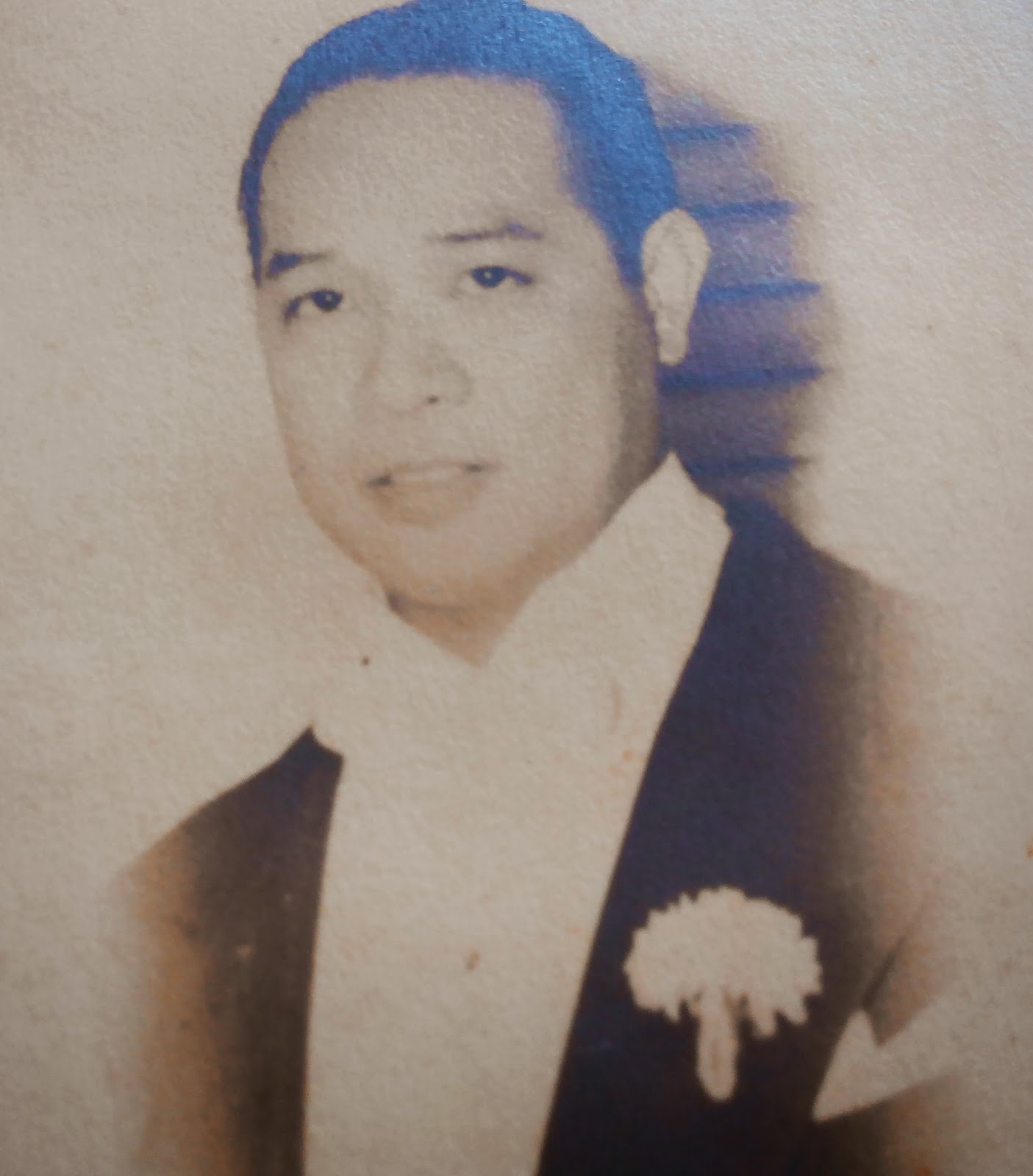 Dr. Herminio Velarde, Jr. had studied Medicine in the University of the
Philippines Diliman and graduated in 1942. He specialized in the New York Eye
and Ear Infirmary where he was a Junior Assistant but does the job of a Senior
Assistant for the House Surgeon in the Ophthalmic Department of the said
institution in 1953.
Dr. Herminio Velarde, Jr. had studied Medicine in the University of the
Philippines Diliman and graduated in 1942. He specialized in the New York Eye
and Ear Infirmary where he was a Junior Assistant but does the job of a Senior
Assistant for the House Surgeon in the Ophthalmic Department of the said
institution in 1953.
He.
was a doctor but an artist as well, for his mother was the daughter of the
Composer- Conductor of the Famous Zarzuela “Walang Sugat” and “Minda Mora”. So,
during his younger days, Dr. Velarde, Jr. would escape his medical profession
to sing on the radio live on- air with his best friend- cousin, Miguel Velarde,
Jr.
He
showed his passion for music not only in his love for singing but he actually
did a few compositions for two known zarzuelas. In “Walang Sugat”, he composed
“Kalayaan, Ipaglaban” and for “Minda Mora”, “Gunita”. Not forgetting the UP
Hymn of his department.
Production Supervisor

Joji Felix Velarde is a well- known danseuse and once a prima
ballerina, chorographer and a top fashion model. After her ballet studies with
Madame Albeit and Totoy de Oteyza, she won the Alicia Markova Scholarship for
ballet excellence and studied abroad at the Ballet Arts Studio at Carnegie
Hall, New York, the Rambert Academy in London, with Karen Marie taft in Madrid
and with Julia Barashkova and Vitale Fokine in New York.
She
choreographed the first Filipino show at Lincoln Center in New York
City—“Giting Kayumanggi” and local musicals directed by Fr. James B. Reuters.
On TV, she had produced and hosted “Sights and Sounds of Pacifica” and “Joji”.
Stage Director
 Daisy H. Avellana, is an actor, director and writer. She is renowned
as a National Artist for Theater. Born in Roxas City, Capiz on January 26,
1917. She has elevated legitimate theater and dramatic arts to a new level of
excellence by staging and performing in breakthrough productions of classic
Filipino and foreign plays and by encouraging the establishment of performing
groups and the professionalization of Filipino theater. Together with her
husband, National Artist Lamberto Avellana and other artists, she co-founded
the Barangay Theatre Guild in 1939 which paved the way for the popularization
of theatre and dramatic arts in the country, utilizing radio and television.
Daisy H. Avellana, is an actor, director and writer. She is renowned
as a National Artist for Theater. Born in Roxas City, Capiz on January 26,
1917. She has elevated legitimate theater and dramatic arts to a new level of
excellence by staging and performing in breakthrough productions of classic
Filipino and foreign plays and by encouraging the establishment of performing
groups and the professionalization of Filipino theater. Together with her
husband, National Artist Lamberto Avellana and other artists, she co-founded
the Barangay Theatre Guild in 1939 which paved the way for the popularization
of theatre and dramatic arts in the country, utilizing radio and television.
She
has starred in plays like Othello (1953), Macbeth in Black (1959), Casa de
Bernarda Alba (1967), Tatarin. She is best remembered for her portrayal of
Candida Marasigan in the stage and film versions of Nick Joaquin’s Portrait of
the Artist as Filipino. Her directorial credits include Diego Silang (1968),
and Walang Sugat (1971). Among her screenplays were Sakay (1939)and Portrait of
the Artist as Filipino (1955)
Musical Director
Miguel "Mike" Velarde
Jr., is a composer, musical
scorer and a movie actor.
He
entered the University of the Philippines wherein he studied Medicine but did
not finish his degree. He eventually pursued studying music. He financed his
studies by working as a bus conductor after his father found out that he was
not taking his medical studies seriuously. Dr. Antonio Molina and Ariston
Avelino taught him his first lessons in harmony and composition. During this
time, he enjoyed jazz and American popular tunes. He later got a job at a radio
station wherein he was featured in programs such as "Sunrise Program"
in the morning and "Stardust Program" at night. He then opened a jazz
school and became song editor for the Philippines Free Press. Mike Velarde
eventually went into writing Tagalog songs for the Filipinos wherein he later
composed the song 'Ugoy-Ugoy 'Blues' which eventually brought him towards
working with movies. He also had a jazz band named Mike Velarde's Jazztocrats.
He later became the editor of the Literary Song Movie Magazine which was owned
by the late Congressman Pedro Vera. During the Japanese Occupation, Mike
Velarde began to write concertized arrangements of folk songs. He also became
the musical director of the Avenue Theater and most of his arrangements became
popular overtures.
Musical Score and Arrangements
Restituto Umali, better known as "Restie" Umali, is a
composer and musical director whose main works are scores for motion picture.
He
studied at the Jose Rizal College (JRC), wherein he earned a Bachelor of
Science degree in Commerce. He was later exposed to 'pop' tunes during his
performances with both the Mapa Orchestra and the JRC Band. He was a scholar of
JRC for playing in the school band. He earned extra money doing band
arrangements of various songs and pieces as well as composing short school
songs. He also played double-basss professionally for radio programs and also
for the dance orchestra of the Army and Navy Club. When World War II broke out,
he began arranging for and conducting musical groups for stage shows and dance
halls. He then took formal lesson in harmony, to broaden his musical horizon,
under Felipe P. de Loen. He became a volunteer instructor teaching the
double-bass at the University of the Philippines (UP). While at UP, he took up
courses in composition and conducting. His mentors included Antonino
Buenaventura, Bernardino Custodio, Lucio San Pedro, Ramon Tapales, and Lucrecia
Kasilag. In 1957, he transferred to the UST where he handled chorus and
instrumental and choral arrangement up to 1962. During this time, he also
became a "ghost composer" that lasted for 14 years. In 1959, he
eventually lost his anonimity and introduced himself as the musical director or
movie scorer for the movie Cry Freedom. This set the path towards winning his
first FAMAS award in 1964.
 Lucio D. San Pedro is a master composer, conductor, and teacher whose
music evokes the folk elements of the Filipino heritage. Cousin to
"Botong" Francisco, San Pedro has produced a wide-ranging body of
works that includes band music, concertos for violin and orchestra, choral
works, cantatas, chamber music, music for violin and piano, and songs for solo
voice. He was the conductor of the much acclaimed Peng Kong Grand Mason Concert
Band, the San Pedro Band of Angono, his father's former band, and the Banda
Angono Numero Uno. His civic commitment and work with town bands have
significantly contributed to the development of a civic culture among Filipino
communities and opened a creative outlet for young Filipinos.
Lucio D. San Pedro is a master composer, conductor, and teacher whose
music evokes the folk elements of the Filipino heritage. Cousin to
"Botong" Francisco, San Pedro has produced a wide-ranging body of
works that includes band music, concertos for violin and orchestra, choral
works, cantatas, chamber music, music for violin and piano, and songs for solo
voice. He was the conductor of the much acclaimed Peng Kong Grand Mason Concert
Band, the San Pedro Band of Angono, his father's former band, and the Banda
Angono Numero Uno. His civic commitment and work with town bands have
significantly contributed to the development of a civic culture among Filipino
communities and opened a creative outlet for young Filipinos.
His
orchestral music include The Devil's Bridge, Malakas at Maganda Overture,
Prelude and Fugue in D minor, Hope and Ambition; choral music Easter Cantata,
Sa Mahal Kong Bayan, Rizal's Valedictory Poem; vocal music Lulay, Sa Ugoy ng
Duyan, In the Silence of the Night; and band music Dance of the Fairies,
Triumphal March, Lahing Kayumanggi, Angononian March among others.
 Col. Antonino Ramirez Buenaventura is a National
Artist for Music was a renowned composer, conductor, and teacher. It was he who
restored the Philippine Constabulary Band, reputedly the only military band
that sounded like a symphony orchestra, to its former glory as one of the best
military bands in the world. The band would later be renamed the Philippine
Army Band.
Col. Antonino Ramirez Buenaventura is a National
Artist for Music was a renowned composer, conductor, and teacher. It was he who
restored the Philippine Constabulary Band, reputedly the only military band
that sounded like a symphony orchestra, to its former glory as one of the best
military bands in the world. The band would later be renamed the Philippine
Army Band.
Buenaventura
promoted Philippine music by extensively using folk materials in his works. He
recorded folk and dance music around the country with Ramon Tolentino and
National Artist for Dance Francisca Reyes Aquino. Buenaventura composed the
music and did the notations for the folk dances as researched by Aquino.
Production Consultant
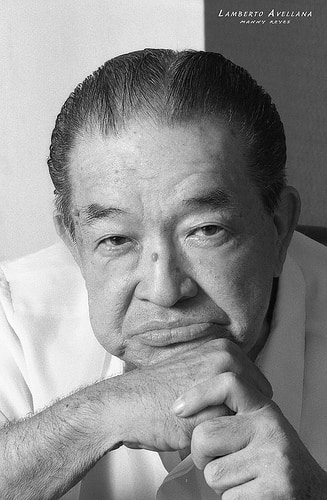 Lamberto V. Avellana, director for theater and film, has the distinction
of being called "The Boy Wonder of Philippine Movies" as early as
1939. He was the first to use the motion picture camera to establish a point-of-view,
a move that revolutionized the techniques of film narration. Avellana, who at
20 portrayed Joan of Arc in time for Ateneo's diamond jubilee, initially set
out to establish a Filipino theater. Together with Daisy Hontiveros, star of
many UP plays and his future wife, he formed the Barangay Theater Guild which
had, among others, Leon Ma .Guerrero and Raul Manglapus as members. It was
after seeing such plays that Carlos P. Romulo, then president of Philippine
Films, encouraged him to try his hand at directing films. In his first film
Sakay, Avellana demonstrated a kind of visual rhythm that established a new
filmic language.
Lamberto V. Avellana, director for theater and film, has the distinction
of being called "The Boy Wonder of Philippine Movies" as early as
1939. He was the first to use the motion picture camera to establish a point-of-view,
a move that revolutionized the techniques of film narration. Avellana, who at
20 portrayed Joan of Arc in time for Ateneo's diamond jubilee, initially set
out to establish a Filipino theater. Together with Daisy Hontiveros, star of
many UP plays and his future wife, he formed the Barangay Theater Guild which
had, among others, Leon Ma .Guerrero and Raul Manglapus as members. It was
after seeing such plays that Carlos P. Romulo, then president of Philippine
Films, encouraged him to try his hand at directing films. In his first film
Sakay, Avellana demonstrated a kind of visual rhythm that established a new
filmic language.
Sakay
was declared the best picture of 1939 by critics and journalists alike and set
the tone for Avellana's career in film that would be capped by such distinctive
achievements as the Grand Prix at the Asian Film Festival in Hong Kong for Anak
Dalita (1956); Best Director of Asia award in Tokyo for Badjao, among others.
Avellana
was also the first filmmaker to have his film Kandelerong Pilak shown at the
Cannes International Film Festival. Among the films he directed for worldwide
release were Sergeant Hasan (1967), Destination Vietnam (1969), and The Evil
Within (1970).
Choral Master
Dr. Lois Florendo Bello is the founder of Manila Concert Choir (MCC) in 1951, that has
proven its mettle in the world of choral singing for the past fifty years. MCC
continually recharges itself through second and third generation members who
freely give of their time and energies to singing. It continues giving
performances before all types of audiences ranging from the urban and rural
poor, to church members, to the highest officials of the land.
Lyricist
 Constancio Canseco de Guzman, acknowledged dean of Filipino movie composers and
musical directors, grew up in Manila where he studied piano and composition
under Nicanor Abelardo. He finished his BS Commerce degree at Jose Rizal
College in 1928, and passed the certified public accountants board exam in
1932. He became the music director of movie production outfits like Sampaguita,
LVN, Royal, Excelsior, Lea, and Tagalog Ilang-ilang. In 1948, his song “Ang
Bayan Ko” and “Kung Kita’y Kapiling” bagged the gold medal at the Paris
International Fair. The same song won for him the Awit Award for best Filipino
lyricist.
Constancio Canseco de Guzman, acknowledged dean of Filipino movie composers and
musical directors, grew up in Manila where he studied piano and composition
under Nicanor Abelardo. He finished his BS Commerce degree at Jose Rizal
College in 1928, and passed the certified public accountants board exam in
1932. He became the music director of movie production outfits like Sampaguita,
LVN, Royal, Excelsior, Lea, and Tagalog Ilang-ilang. In 1948, his song “Ang
Bayan Ko” and “Kung Kita’y Kapiling” bagged the gold medal at the Paris
International Fair. The same song won for him the Awit Award for best Filipino
lyricist.
Lighting (designs) and Technical Consultant

Teddy Hilado
was the lighting director of The Philippine Cultural Center, and General
Manager of Folk Arts Theater. Tainted by his association with President Marcos
and his wife, he was replaced when Cory Aquino came to power. He is now an
independent lighting engineer, lighting
not only theater, but architectural installations. He is also an actor, known
for Dakpin si Pedro Navarro! (1963).
Production Manager and Stage Manager

Allan Vasquez Cosio (June 1941) has been a painter,sculptor, and a
tapestry artist. He has done abstract paintings and is also a good portaitist
in pastel. He has been largely influenced by Vasarely and Bridget Riley. He
also drew inspirations from indigenous sources such as the Philippine banig
(mat).
He is a prize winner
for five consecutive years in the Art Association of the Philippines (AAP) art
competition in 1975-1979 and the Baghdad International Art Festival in 1986. He
had also won the grand prize and a British Council study grant in the AAP
competition
Assistant Stage Manager
Jimmy Asensio is a lawyer- professoer by profession, but he is a
more theatre man by inclination. He is an actor, director, production- stage
manager molded in one cast, working for drama, opera, ballet, radio, and
television for different groups in English, Pilipino and Spanish.
Wardrobe Mistress

Ivi Avellana-Cosio is a Philippine painter, printmaker, and
photographer. She is especially known for her Baybayin series of acrylic
paintings on canvas and handmade paper that make use of indigenous motifs.
She
is the daughter of 2 National Artists of the Philippines: Lamberto V. Avellana
(film) and her mother being Daisy H. Avellana (theater). She was therefore
encouraged in all her artistic undertakings as she was growing up, including
writing stories and essays and acting on stage, radio, and television.
Avellana-Cosio
received a degree in Fine Arts from the University of Santo Tomas. She then
went to the Philippine Women’s University for advanced courses, and attended
the Contemporary Graphic Arts Workshop in Printmaking of Manuel Rodriguez Sr.,
a pioneer in Philippine printmaking. She
began exhibiting her works in 1967. Since then her works have been exhibited in
about 200 shows, including both solo and group shows. At times she has
exhibited with her husband, painter and sculptor Allan Cosio. She has also won
many awards and competitions including the Philip
Morris Asean Award and the Araw ng Maynila Patnubay ng Sining at Kalinangan
Award for Painting given by the City of Manila (1999)
Voice Consultant
Dalisay J. Aldaba was an Opera Singer, known as the great little
butterfly in the Philippines. She was born on September 9, 1912, completed her
piano course at the UP Conservatory of Music in 1936 and earned an Associate in
Arts from the university in 1941. She obtained a Master of Arts in music,
literature, and voice at the University of Michigan, USA in 1947. She was the director
of the opera workshop and head of the Voice Department at the Philippine
Women's University. Her singing debut was with the New York City Opera Company
in the title role of Cio Cio San in Puccini's Madame Butterfly.
She
founded the Opera Guild of the Philippines on December 22, 1969. The Manila
Music Lovers Society named her the Opera Singer of the year in 1947.
Speech Consultant
Paraluman Aspillera, author, teacher, and newspaper journalist,
specialized in the teaching of English and Tagalog. She was director of the
Institute of Filipino Language and Culture at Philippine WomenAEs University
and a professor of Pilipino and Philippine Literature at the Institute of Asian
Studies, University of the Philippines. She wrote the popular daily column
oYour Tagalog Column, o which appeared in the Manila Times, and authored many
books and articles in both English and Tagalog. Mrs. Aspillera dedicated
herself to promoting the national language and culture of her country through
extensive travel in North America, Europe, and Asia, and served as executive
secretary and director of the UNESCO-sponsored Akademya ng Wikang Pilipino.


.jpg&container=blogger&gadget=a&rewriteMime=image%2F*)


.jpg)


